Your tattoo will probably look its absolute best about five minutes after your artist finishes it. Then healing starts.
Suddenly it can look red. Then shiny. Then dry. Then pieces of skin that appear suspiciously full of ink start peeling off. Maybe it looks cloudy. Maybe the black doesn't seem as black. Maybe there's a weird pocket of dark fluid underneath your second skin.
And if it's your first tattoo, this is usually the point where you start wondering:
Did I mess it up?
Most of the time, no.
A tattoo isn't simply ink sitting on top of your skin. Tattooing deliberately creates thousands of tiny injuries in the skin while depositing pigment below the surface. Your body then has to repair that skin while leaving enough pigment behind for the artwork to remain visible.
Understanding that process makes tattoo aftercare much less confusing.
Instead of memorizing a dozen tattoo rules, you can start to understand what your skin actually needs and recognize when something genuinely doesn't look right.
What Your Skin Is Healing From
When your artist tattoos you, needles repeatedly pass through the outer portion of your skin and deposit pigment deeper within it.
That matters because your body doesn't recognize the tattoo session as "art."
It recognizes injured skin.
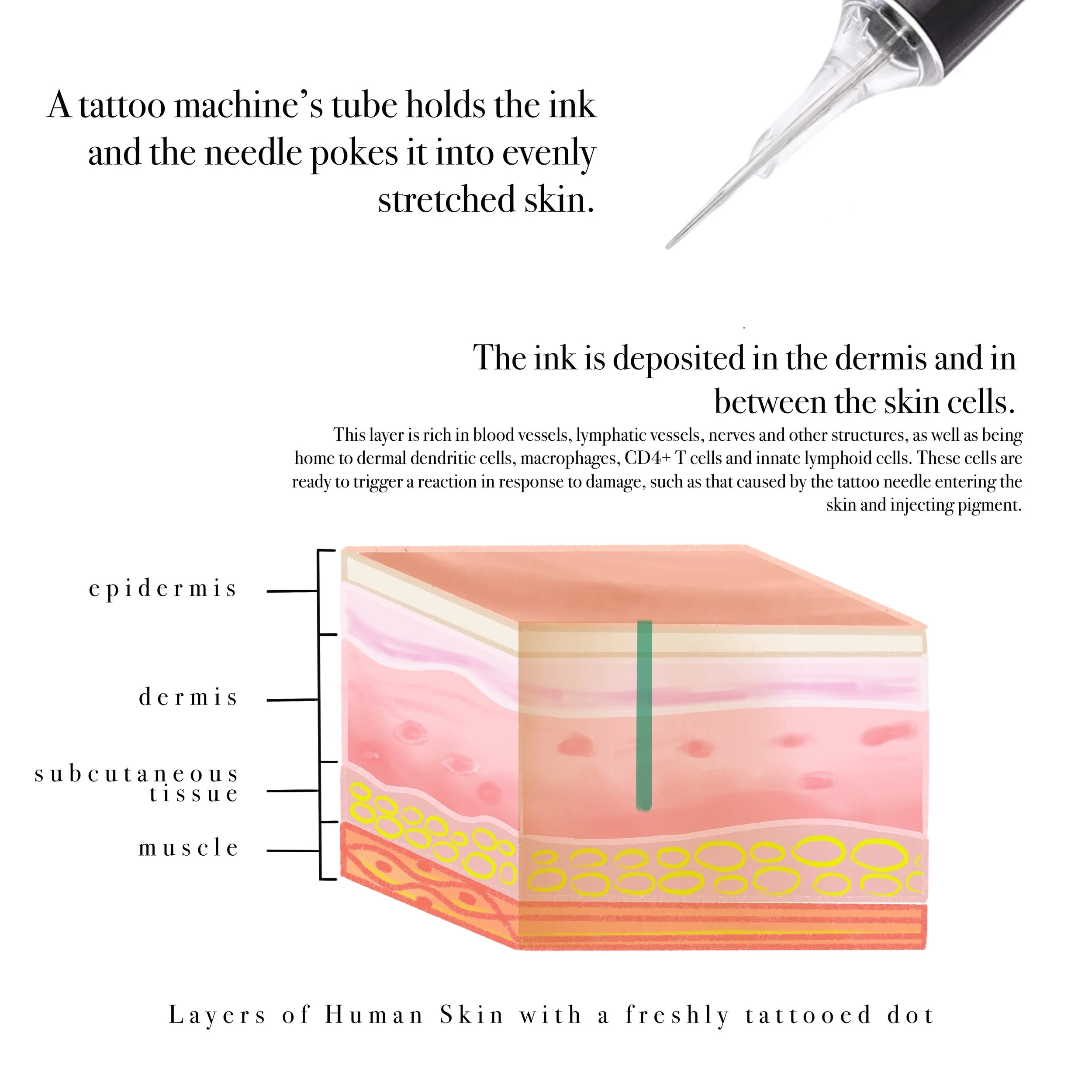
Your immune system responds almost immediately. There can be bleeding, inflammation, swelling and fluid moving into the area while your body begins repairing the damaged tissue. Immune cells also interact with the pigment that has been deposited beneath the surface.
Some of that pigment eventually ends up inside long-lived cells in the dermis, including macrophages and fibroblasts. Research suggests that macrophages play an especially interesting role:
when pigment-holding macrophages eventually die, other macrophages can recapture the released pigment, helping explain how tattoos remain visible for years.
You don't need to understand the cellular biology to heal a tattoo properly.
But it explains an important point:
Your tattoo isn't finished just because the artist stopped tattooing.
The artwork is finished.
Your body still has work to do!
What to do before getting tattooed:
Good Healing Starts Before the Needle Touches You
Aftercare gets most of the attention, but there are things you can do before your appointment that make the entire process easier on both you and your skin.
Show up with healthy skin
One of the best things you can bring to a tattoo appointment is boring, normal skin.
Not sunburned skin.
Not peeling skin.
Not skin you aggressively exfoliated the night before.
Not a rash you've been hoping disappears by appointment time.
Tattooing is already going to stress the skin. Starting with skin that is irritated or injured gives your artist a worse canvas and gives your body another problem to deal with.
Tattoo artists commonly refuse to tattoo over active sunburn because sunburn itself is skin damage, and peeling or inflamed skin can interfere with tattooing and stencil application.
If something unusual develops on the area before your appointment, send your artist a photo rather than trying to hide it until you arrive.
Eat before your appointment
This sounds incredibly basic until you're three hours into a tattoo and realize you skipped breakfast because you were nervous.
Eat a real meal beforehand.
You don't need some magical "tattoo diet." You need enough food that your body isn't trying to handle a long, uncomfortable tattoo session on an empty stomach.
For longer sessions, bring water and an easy snack unless your studio tells you otherwise.
Tattoo artists commonly recommend eating beforehand and bringing something to eat during long sessions, particularly because people can become lightheaded or simply run out of energy.
Hydrate normally
You also don't need to drink two gallons of water the morning of your tattoo.
Just don't show up dehydrated.
Start the day before, drink normally throughout the day and bring water to your appointment.
Hydration isn't going to magically make your tattoo heal perfectly, but arriving fed, hydrated and rested makes far more sense than arriving hungover, hungry and exhausted.
Skip the pre-tattoo drinks

Alcohol and tattoo appointments are a bad combination.
Aside from impaired judgment—which is already a poor match for permanent body art alcohol can contribute to dehydration and can affect bleeding. Practical tattoo guidance consistently recommends avoiding alcohol before a session.
And don't stop prescription medications just because somebody online says they "thin your blood."
If you take anticoagulants, aspirin for a medical reason, isotretinoin, immune-modifying medications, or anything else you're concerned could affect tattooing or healing, talk to the clinician who prescribed it and tell your tattoo artist.
Don't independently stop a prescribed medication for a tattoo appointment.
Know if your skin has a history of unusual scarring
If you've developed keloids from previous injuries, surgeries or piercings, that's something worth discussing before intentionally creating another skin injury.
The American Academy of Dermatology specifically notes that tattooing can trigger keloid formation in people who are prone to them.
The same idea applies if you have an active skin condition in the area you want tattooed.
That doesn't automatically mean you can't get tattooed. It means it's worth having the conversation before the day of your appointment.
During the Tattoo:
Don't Treat Endurance Like a Competition
People sometimes imagine that being a "good tattoo client" means sitting completely silently for six hours while their soul leaves their body.
It doesn't.
A good client communicates!
Speak up before the stencil becomes permanent

Look at your stencil from different angles.
Stand normally.
Sit down if the placement changes when your body bends.
Look in the mirror.
Take a photo.
And if something feels wrong, say something.
Moving a stencil is dramatically easier than moving a finished tattoo.
Your artist would much rather reposition it now than have you spend the next ten years wishing it were an inch to the left.
Take a break when you need one
If you need to stretch, use the bathroom, drink water, eat something or simply reset for a few minutes, tell your artist.
For very long sessions, breaks can actually help you finish the session instead of reaching a point where your body has completely had enough.
Just communicate before suddenly moving.
Tell your artist if you feel faint or sick
Feeling nervous is one thing.
Feeling like you're about to lose consciousness is something your artist needs to know.
Don't try to "tough it out."
Tell them.
They can stop, get you into a safer position and give you time to recover.
Don't touch the tattoo or tattooing area
Once your artist has cleaned and prepared the area, let them control the working environment.
Your phone, clothing, hands and everything you've touched throughout the day are not part of the sterile setup.
If you accidentally touch the freshly tattooed area, just tell your artist instead of pretending it didn't happen.
The First Few Hours:
Your Tattoo May Look Messier Than You Expected
Immediately after the tattoo, some redness, swelling, soreness, warmth and clear fluid can be normal.
The American Academy of Dermatology specifically lists redness, swelling, soreness, clear fluid, itching, flaking and some scabbing as things that can occur during normal tattoo healing.
Depending on how heavily the area was worked, the tattoo may feel similar to a sunburn.
Your artist will normally cover it before you leave.
That covering might be traditional wrap or a transparent adhesive "second skin" type bandage.
Those aren't interchangeable, so how long the covering stays on depends heavily on what your artist used.
Liquid Under Second Skin is Okay!
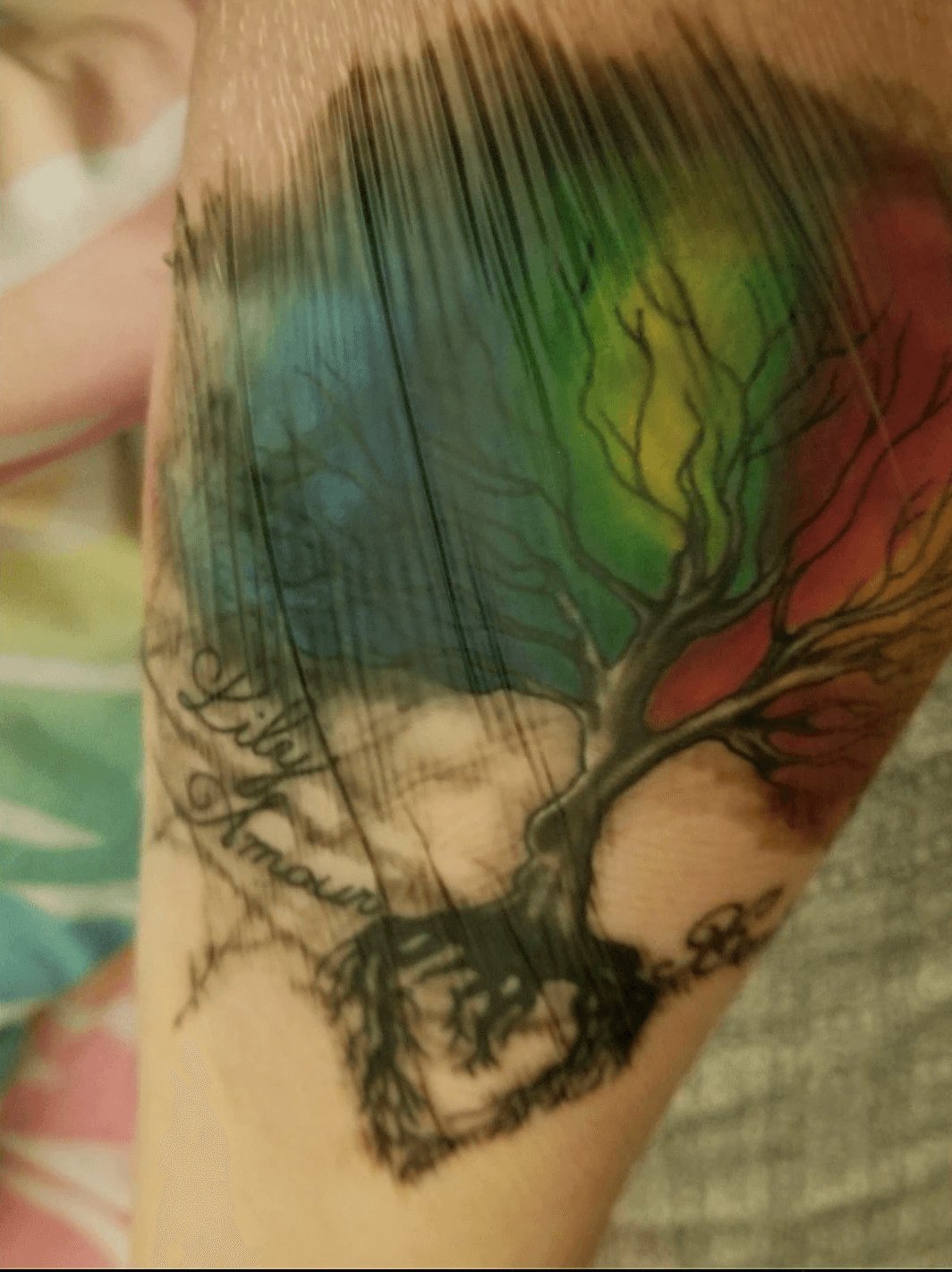
This deserves its own section because it scares an incredible number of people.
If you're wearing a transparent tattoo bandage and it suddenly looks like someone poured black soup underneath it, your tattoo isn't melting.
Fresh tattoos can release:
plasma
small amounts of blood
lymphatic fluid
excess pigment
When those mix together under a clear bandage, they can create a dark, blurry-looking pocket over the tattoo.
Bandage manufacturer Saniderm notes that this mixture of blood, plasma and ink is common during the first stage of healing.
Current tattoo forums are full of first-time clients panicking about exactly this sight often thinking the tattoo ink is somehow leaking out of their design.
What matters much more is whether the bandage remains properly sealed.
If fluid is leaking out or water gets under the bandage, the protective seal has been compromised. Follow your artist's instructions and the directions for the specific bandage being used; Saniderm, for example, advises removal when water gets beneath the bandage and cleaning the tattoo before either applying a fresh bandage or switching to open healing.
Don't improvise by sealing a contaminated bandage back down with random tape.
After the Wrap: Cleaning and Moisture
This is where tattoo advice can become unnecessarily complicated.
One artist swears by one soap.
Someone else tells you that soap will destroy your tattoo.
One person says Aquaphor.
Another tells you Aquaphor is the devil.
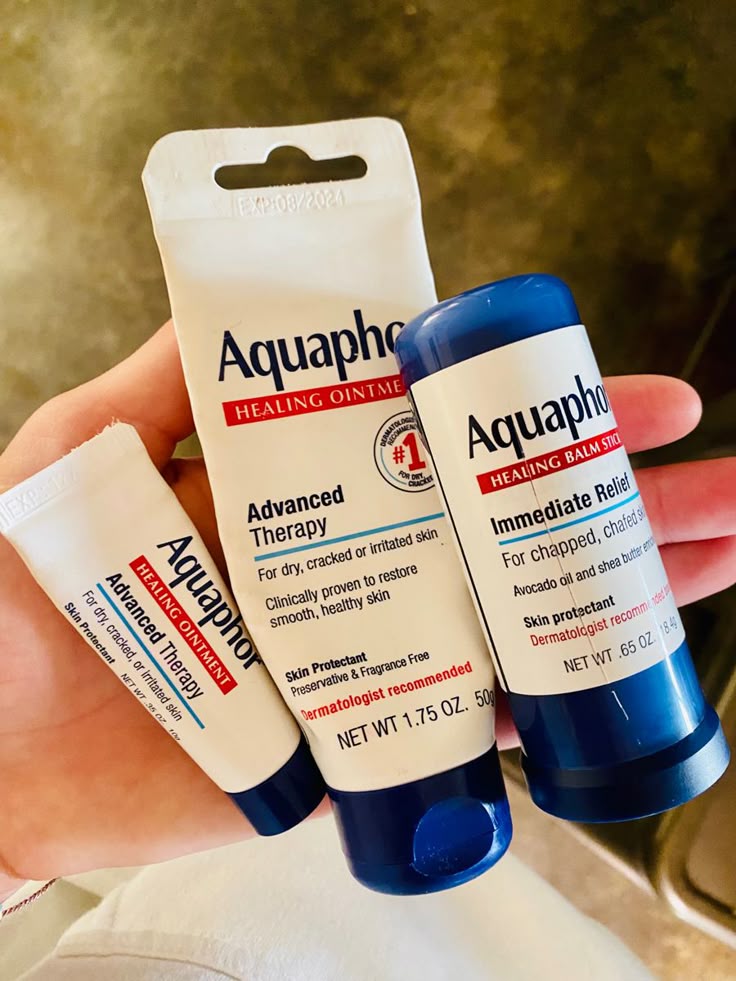
Someone on TikTok has a twelve-product healing routine.
Take some comfort in knowing that even researchers have noticed how inconsistent tattoo aftercare instructions are.
A 2023 analysis looked at 700 tattoo aftercare instructions from across the United States and found enormous variation in recommendations, including the cleansers, moisturizers and topical products being suggested.
There isn't one magic product that determines whether your tattoo survives.
The basic goals are much simpler:
Keep the area reasonably clean, avoid irritating it, maintain appropriate moisture and give the skin time to repair itself.
Wash it gently
Follow the schedule your artist gives you.
When washing a fresh tattoo:
wash your hands first
use lukewarm water
use a gentle cleanser
wash with your hands rather than aggressively scrubbing
rinse it clean
pat it dry instead of rubbing it
Mayo Clinic recommends washing tattooed skin gently with soap and water and patting rather than rubbing the area dry.
Avoid turning cleaning into scrubbing.
A tattoo doesn't become twice as clean because you attacked it with a washcloth.
Moisturize, but don't marinate it
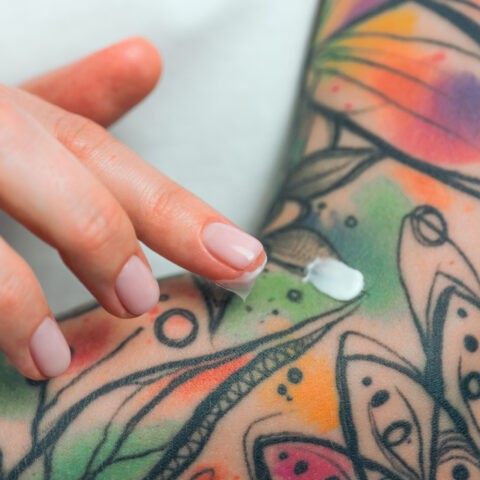
Once you've transitioned to the moisturizer stage, use a mild product recommended by your artist and apply enough to prevent the tattoo from becoming painfully dry.
You don't need to bury it beneath a thick shiny layer every hour.
The goal is comfortable skin, not a permanently wet tattoo.
Mayo Clinic recommends mild moisturizer during healing, while the AAD recommends moisturizing tattooed skin when it feels dry.
This is another area where specific product recommendations differ significantly between studios.
Rather than obsessing over finding the internet's single "best tattoo lotion," prioritize something your skin tolerates well and that fits the aftercare method your artist gave you.
The Tattoo Healing Timeline:
Healing isn't a perfectly synchronized calendar.
A tiny fine-line tattoo and a heavily saturated full-color thigh piece aren't asking the same amount from your skin.
Placement, size, technique, saturation and your individual skin all matter.
But the general progression can help you figure out whether things appear to be moving in the right direction.
Post Tat: The First 24–48 hours
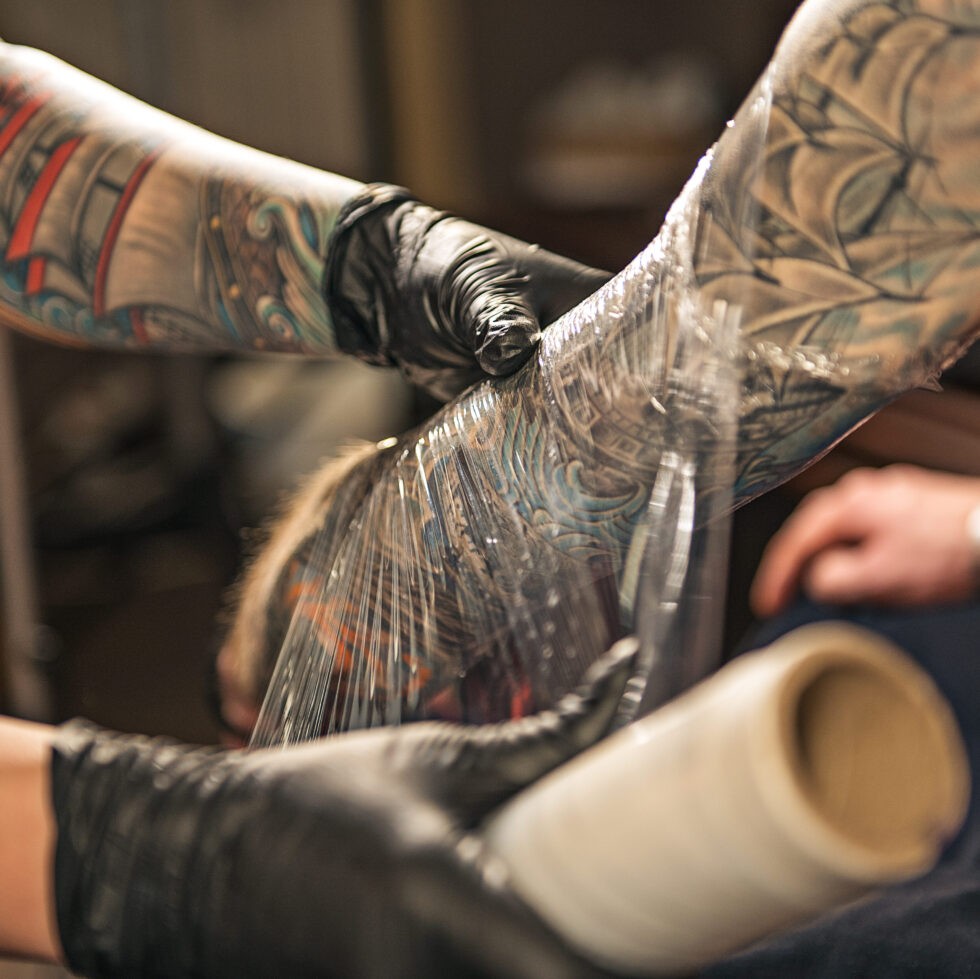
This is the "I was just tattooed" stage.
You may notice:
tenderness
redness
swelling
warmth
clear or slightly blood-tinged fluid
excess ink appearing around or beneath the dressing
This is the period where some inflammation makes sense.
Think less about whether redness exists at all and more about what it does next.
Over the following days, you generally want soreness, swelling and redness to trend downward, not progressively worsen.
Days 3–7: Welcome to the Ugly Stage
This is where first-time tattoo anxiety usually kicks in.
The tattoo that looked perfectly saturated at the studio may start looking:
dry
tight
shiny
flaky
cloudy
less vibrant
slightly wrinkled
itchy
This can be completely normal.
Your outer skin is repairing itself and shedding damaged surface cells.
Sometimes those flakes contain pigment and look alarmingly dark.
That does not automatically mean the actual tattoo is falling out.
The pigment that creates the lasting tattoo was deposited deeper in the skin.
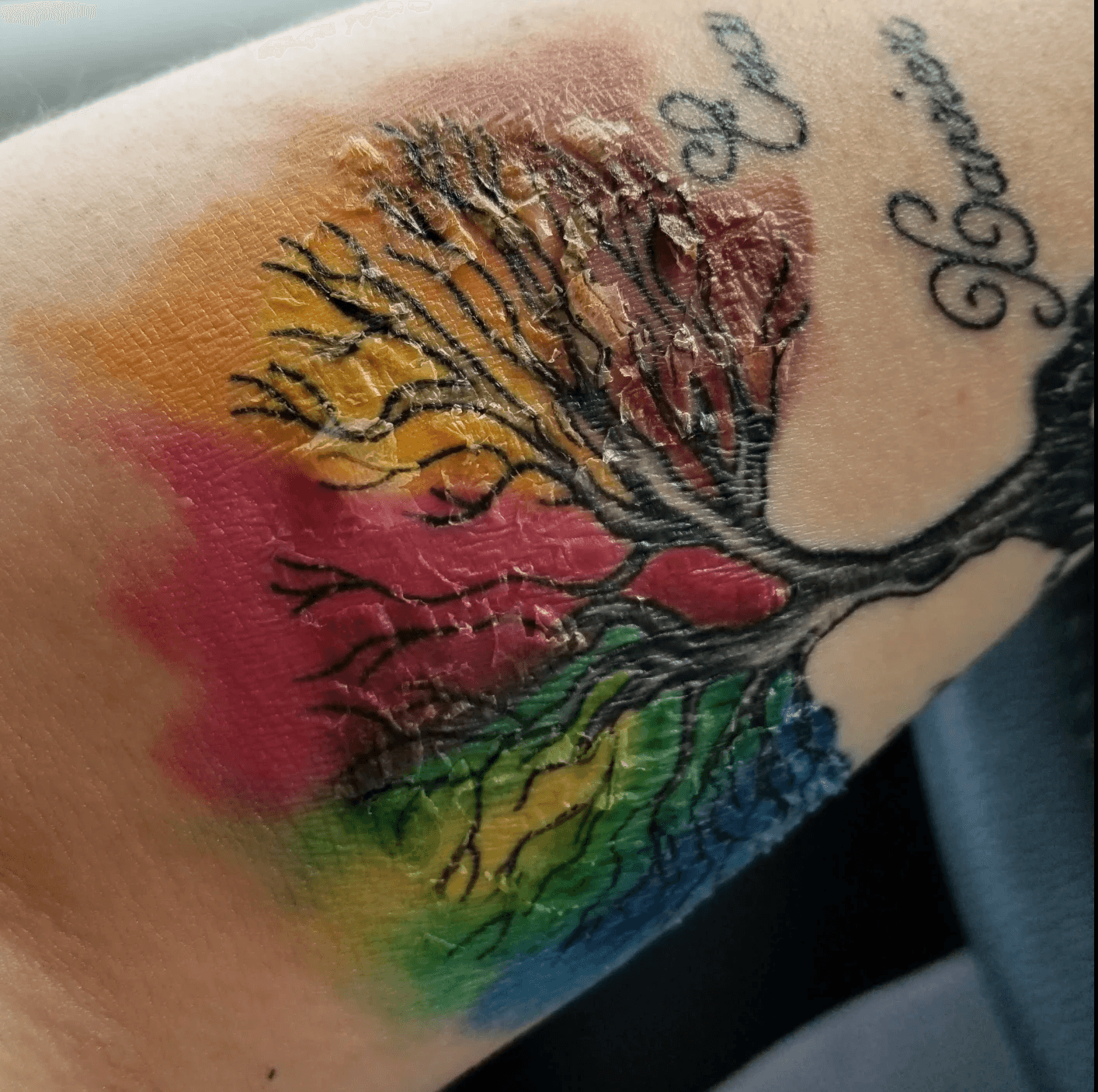
Do not pick the flakes
This might be the single easiest way to turn a normal healing process into an unnecessary problem.
If something is ready to come off, washing and normal movement will eventually take care of it.
Don't help.
Picking thick scabs or peeling skin prematurely can reopen the area, increase irritation and potentially affect how the tattoo heals.
If it itches, resist scratching directly with your nails.
Week Two and Beyond:
Why Your Tattoo Can Look Cloudy:
One of the strangest parts of tattoo healing is that a tattoo can appear mostly healed but still not look quite like it did when it was fresh.
People often describe it as:
milky
cloudy
shiny
dull
silvery
That appearance can happen while the new surface skin continues normalizing.
This is why judging color saturation during active peeling is usually premature.
Current tattoo communities are full of people around days 6–10 worried that their tattoo suddenly looks faded or milky, only to discover that this can be part of the healing process.
Give the tattoo time before deciding that a section "lost all its ink."
If something truly healed lighter than intended, that's what touch-ups are for.
When Is Your Tattoo Fully Healed?
The dramatic surface healing happens relatively quickly.
Mayo Clinic says most tattoos take roughly two-four weeks to heal, although size and tattoo type can change what care is necessary.
But wound healing isn't an on/off switch.
Your skin continues reorganizing and remodeling tissue after the obvious peeling and scabbing disappear.
That is one reason you shouldn't assume the moment your tattoo stops peeling means it's ready for absolutely everything.
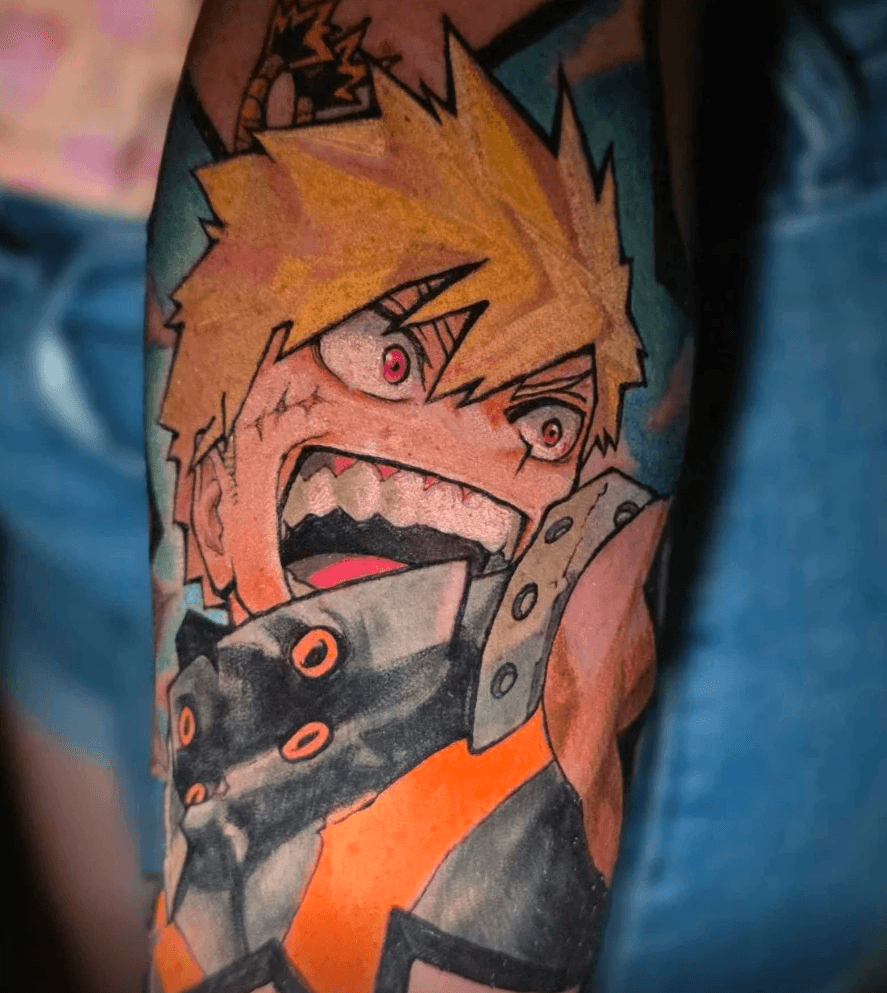
Artist: William-spencer
What to Avoid While Your Tattoo Heals
The easiest healing philosophy is:
Don't introduce unnecessary bacteria, friction, trauma or irritation while your skin is repairing itself.
That means being cautious with a few things.
Swimming and soaking
Skip:
pools
hot tubs
baths
lakes
rivers
oceans
while the tattoo is actively healing.
A quick shower is very different from soaking compromised skin.
Mayo Clinic specifically recommends avoiding swimming during tattoo healing.
Sun
Fresh tattoos and direct sunlight aren't a great combination.
Keep the healing tattoo covered appropriately or out of direct sun rather than trying to tan around it.
Once the tattoo has healed, sun protection becomes one of the best long-term habits you can develop.
More on that in a second.
Tight or abrasive clothing
Your brand-new thigh tattoo probably doesn't need your tightest pair of jeans rubbing against it all day.
Choose clothing that doesn't constantly scrape, stick to or compress the area when you have a practical alternative.
Aggressive workouts
This isn't necessarily a universal "do absolutely nothing for two weeks" rule.
Think about where the tattoo is and what the activity does to it.
A heavy workout can mean:
sweat
friction
stretching
gym equipment contacting the tattoo
tight clothing rubbing the area
A large knee tattoo and a small shoulder tattoo create very different workout problems.
If movement is repeatedly stretching or rubbing the tattoo, give it some time.
And if you're wearing an adhesive bandage, heavy perspiration and repetitive movement can compromise the seal.
When Should You Be Nervous?
The question isn't:
"Is my tattoo red?"
A fresh tattoo can be red.
The better question is:
"Is this getting better or getting worse?"
Normal early inflammation should generally begin settling.
According to the American Academy of Dermatology, warning signs of tattoo infection can include:
redness that becomes darker or spreads instead of decreasing
pain that continues to worsen instead of improving
painful red bumps or a worsening rash
pus
open sores
fever
chills or shivering
The FDA similarly advises contacting a healthcare professional when a tattoo isn't healing normally, particularly when a rash or systemic symptoms such as fever appear.
If you genuinely suspect an infection, don't make your tattoo artist the only person you ask.
Your artist should know something went wrong and can provide useful information about the tattoo, products and ink used.
But infection is a medical problem.
A doctor or dermatologist is the appropriate person to diagnose and treat it
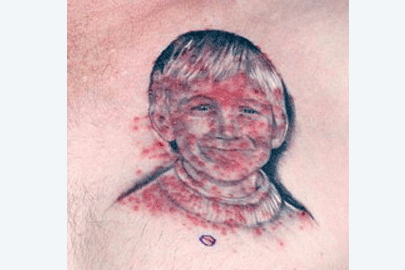

Other Skin Reactions
Tattoo ink reactions can occasionally happen too.
Unlike normal irritation from the tattooing process, an allergic or inflammatory reaction may appear strongly within one particular pigment.
The AAD notes that ink reactions can involve symptoms such as:
persistent redness or swelling
intense itching
bumps
raised or scaly skin
blisters
lumps
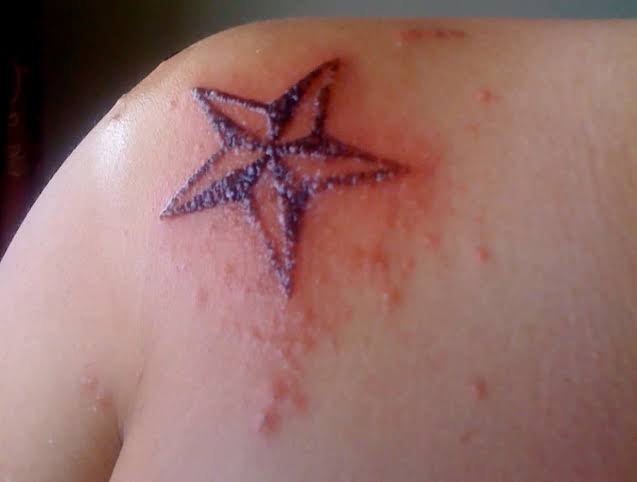
And although people tend to think tattoo reactions only happen immediately, some ink-related reactions can appear much later.
A serious reaction involving difficulty breathing, chest tightness, significant swelling, dizziness or hives requires immediate medical care.
Long-Term Tattoo Care
Once the tattoo is healed, aftercare becomes a lot less complicated.
You don't need expensive "tattoo preservation systems."
You need to take reasonable care of your skin.
Sunscreen is probably your tattoo's best long-term friend
If you only develop one lifelong tattoo-care habit, make it this one.
Protect your tattoos from UV exposure.
Ultraviolet light can fade tattoo pigments over time, and published dermatology literature has specifically linked UV exposure with premature fading of colored tattoos.
The American Academy of Dermatology recommends using a broad-spectrum, water-resistant SPF 30 or higher on healed tattooed skin, applying it before going outside and reapplying approximately every two hours when outdoors.
And yes, this still matters for black-and-gray tattoos.
Black ink can fade too.
Keep your skin moisturized
Hydrated skin generally makes a tattoo look better than dry, ashy skin simply because you're looking at the tattoo through the condition of the skin covering it.
You don't need a tattoo-specific moisturizer forever.
The AAD recommends a water-based lotion or cream when tattooed skin feels dry.
Don't panic when tattoos age
A tattoo is permanent.
Its appearance is not frozen in time.
Your skin will age.
Your body may change.
Pigment can gradually soften.
Fine details can become less crisp.
Colors can become less intense.
That doesn't necessarily mean somebody did something wrong.
You're wearing artwork on living tissue.
A beautifully aged tattoo is still an aged tattoo.
Good application, good healing and sun protection can help stack the odds in your favor, but no aftercare product can stop your skin from being skin.
Your Tattoo Isn’t Made of Glass
Tattoo aftercare can create a weird amount of anxiety.
People worry that sleeping on the wrong side once destroyed their tattoo.
They worry that one accidental scratch removed an entire line.
They see pigment in a flake of skin and assume half the tattoo is gone.
They wake up to an ugly second-skin ink sack and think the tattoo has dissolved overnight.
Your tattoo isn't made of glass.
You should take healing seriously, but you don't need to spend two weeks hovering over it waiting for disaster.
Keep it clean.
Treat it gently.
Don't pick at it.
Avoid obvious sources of contamination and unnecessary trauma.
Follow the instructions appropriate for the bandage and healing method you're using.
Pay attention to whether things are steadily improving.
And once everything is healed, protect it from the sun.
Your body already knows how to heal skin.
Most tattoo aftercare is simply about giving it a good environment to do that work.